Whose Art Shoulders Do You Stand On?
I remember a European Christian leader telling me about their church history through a painting.
In 1916, Art Nouveau painter, Alphonse Mucha, created this painting entitled, “The Magic of the Word: A Brothel Converted into a Convent.” The Mucha Foundation describes the painting in the following way:
Jan Milíč was a learned young theologian who held positions of responsibility in the church and the court of Charles IV. Horrified by the immorality and indulgences of the clergy, Milíč resigned from his duties to dedicate his life to the city of Prague’s poor and preach against the transgressions of the church.
In 1372, his moral teachings resulted in a number of prostitutes repenting and devoting their lives to help the sick and poor. Charles IV and several wealthy citizens donated property to the cause and Milíč established a refuge, a chapel and convent dedicated to Mary Magdalen.
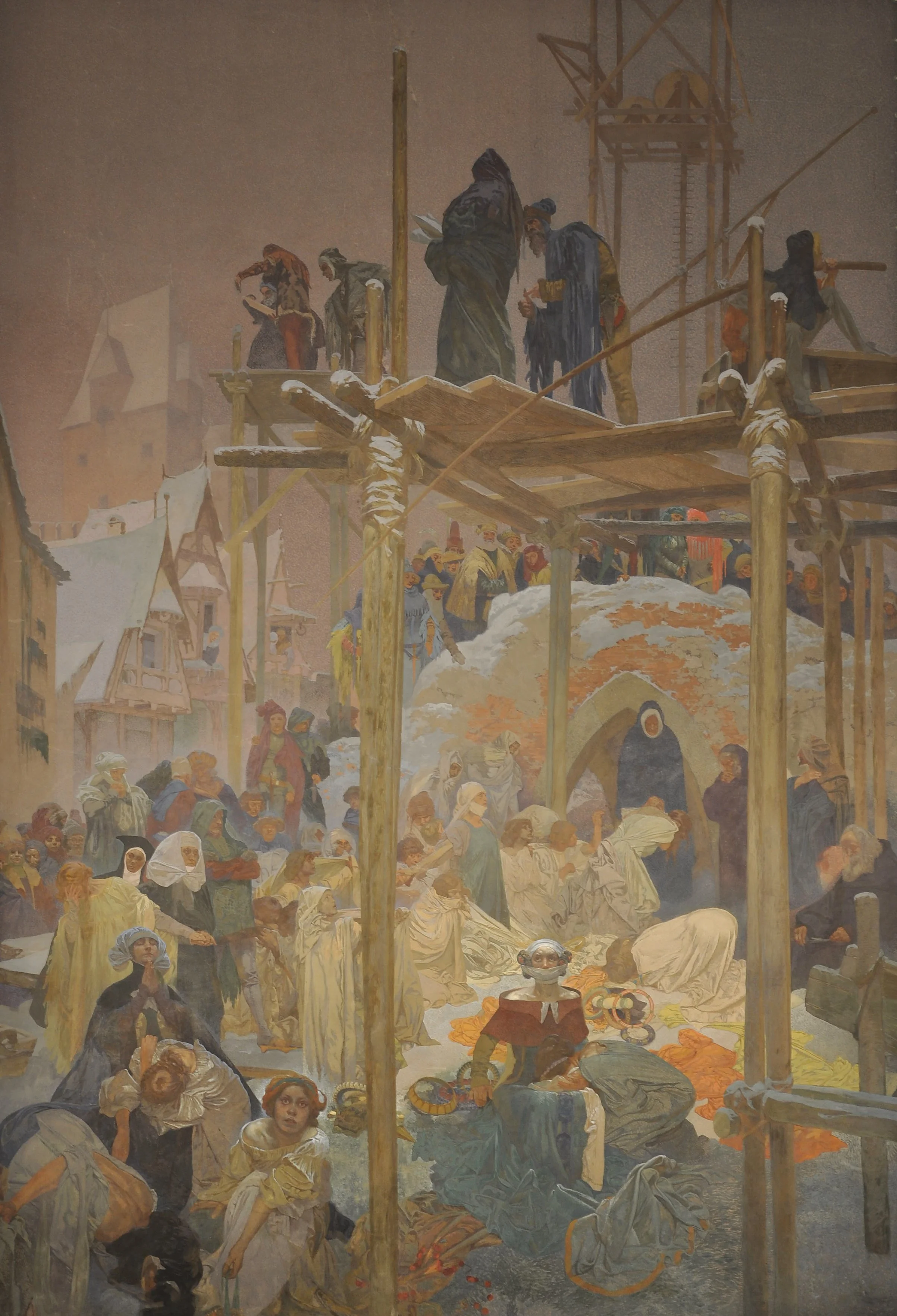
The Magic of the Word: A Brothel Converted into a Convent (Alphonse Mucha)
You will notice a few things in this painting:
In the background, the image shows the remnants of the brothel and the crowd of onlookers.
The construction of the refuge for penitent prostitutes.
Milíč, an unassuming figure in a blue shroud with a long grey beard, stands preaching from the top of the scaffolding.
The repentant women replace their jewellery with white clothing, signifying their new found purity.
The woman with her mouth bound symbolises repentance, rectification and doing good deeds.
The home for these women was called “The New Jerusalem.”
I’m interested in what Mucha, himeself, did here. He took a story from church history and provided the world with an image of the Missio-gathering. He created an theological artifact showcasing the church in seed form.
Not all art is “church-art.” But all art paints a worldview for the imagination to grasp. Artists today stand not only on Milíč’s incarnational shoulders, but Mucha’s world-building shoulders as well.